Disordered Eating Habits to a Registered Dietitian Career: How common is it?
Written by Jennica Roulston: University of Saskatchewan DCSN Jr. Student Representative
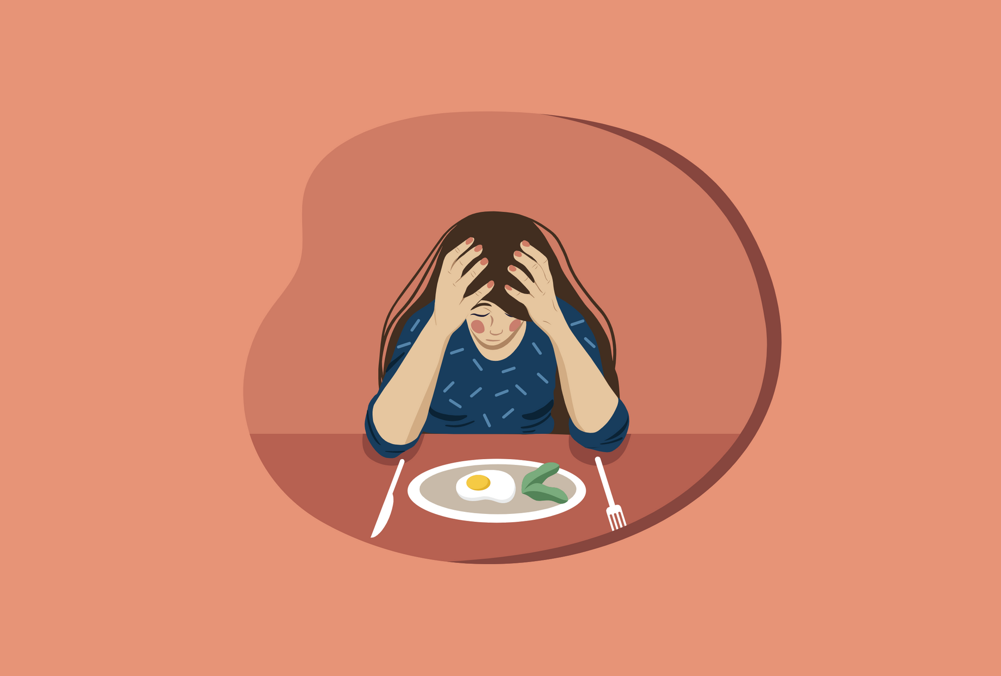
(Stroup, 2023)
There is a wide scope of reasons as to why someone may choose dietetics as a career choice, and often times there are multiple reasons for the choice. With that, I have seen a trend within my peers that it is common for their career motivator to be something tied to their personal life, such as having severe allergies or a family member with specific nutrition related issues.
As for myself, I had multiple reasons for entering this career, and one of the main reasons for me was because of disordered eating habits that I had growing up. As I grew older and became more open about my reasoning, I noticed that others around me dealt with the same issues and it was far more common than I thought. This got me thinking … how common of a motivator is disordered eating for a career as a RD?
Disordered eating comes in many forms, and if left unchecked, these behaviours can develop into a diagnosable eating disorder (Budhiwianto et. al, 2023). Though disordered eating and eating disorders can happen to anyone, there is a high prevalence within young females. Interestingly, dietetics also happens to be a female-dominated field. Here are some of the facts:
-
Strauss et. al. observed that there is a higher prevalence of disordered eating among dietetic students compared to other majors (1999).
-
In the same study, the second most common reason listed for career choice was due to a past or present history of disordered eating.
-
Budhiwianto et. al found that up to 30% of students entered the degree because they had experience with an eating disorder or body shaming (2023).
Though these facts are unfortunate and need to be addressed, there is a light at the end of the tunnel. It has been observed that the rates of disordered eating in students decreases over the length of time spent within a nutrition program (Strauss, 1999). I think this demonstrates that nutrition education is really powerful and can change people’s lives, and this is why dietitians are so important! Someone who struggled with disordered eating themselves can over time become someone who helps others get over those same struggles, and I find that really inspiring.
So, what can we do as future dietitians?
Speaking up about what disordered eating is and how dietitians can help should be encouraged, since it is more common than one might think. Also, disordered eating can often come with stereotypes such as how someone with an eating disorder should look. Since eating disorders and disordered eating can affect people of all body types, we as future professionals can work on debunking the myths and stereotypes surrounding disordered eating to create an inclusive space for all who need support!
References
Budhiwianto, S., Bennett, C. J., Bristow, C. A., & Dart, J. (2023). Global prevalence of eating disorders in nutrition and dietetic university students: A systematic scoping review. Nutrients, 15(10), 2317. https://doi.org/10.3390/nu15102317
Strauss, W.V., Dahlheimer, S.S, & Steiner, J.B. (1999). A comparison of dietetics career choice motivators and prevalence of eating disorders in a college female population. Journal of the American Dietetic Association, 99(9). https://doi.org/10.1016/S0002-8223(99)00764-6
Stroup, S. (2023). Noticing the Signs of an Eating Disorder [Image of disordered eating]. Enhance nutrition. https://enhancenutritionassociates.com/noticing-the-signs-of-an-eating-disorder